Resident and communal access
Identify entrances, shared paths, stairs, bin stores, mobility routes and other areas that need to remain available while scaffold operations take place.

Occupied homes · estate programmes · planned maintenance
Programme-led scaffold access for occupied residential blocks, estate maintenance, external repairs, roofing, refurbishment and contractor works where resident routes, communal areas and phased delivery need to remain controlled.
Occupied-property delivery
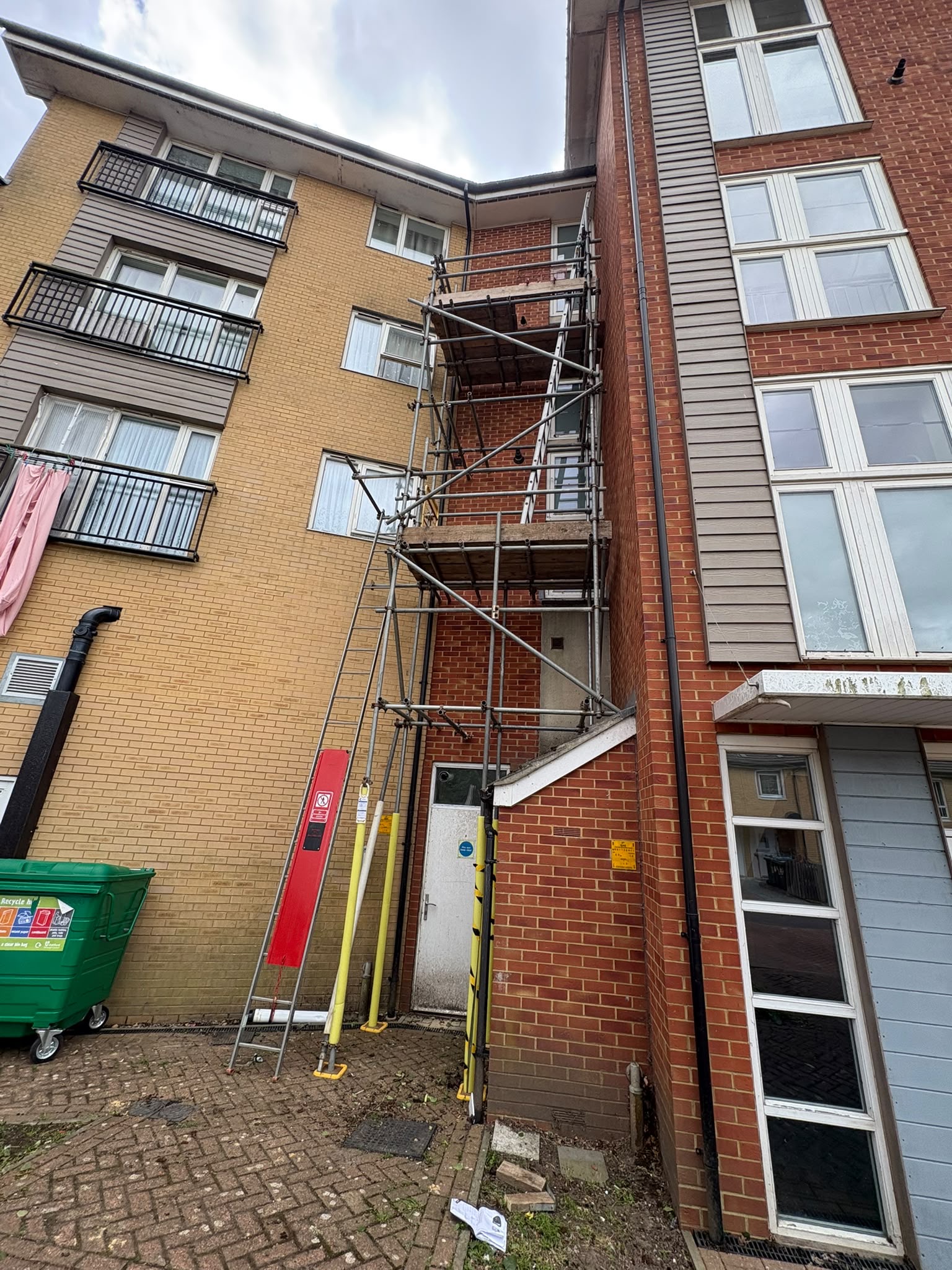
Scaffolding on an occupied block or estate has two simultaneous jobs: provide the working access trades need and keep the residential environment usable and controlled. Entrances, communal paths, bins, parking, emergency routes, deliveries, children and vulnerable residents can all affect the scaffold and programme.
Identify entrances, shared paths, stairs, bin stores, mobility routes and other areas that need to remain available while scaffold operations take place.
Erection, alterations and dismantling can be sequenced by block, elevation or workstream so scaffolding supports the contractor programme rather than becoming a static obstruction.
Delivery points, parking, footways, highways, communal roads and loading zones should be reviewed before attendance, including licensing where scaffold affects the public highway.
RAMS, handover and inspection responsibilities need to be clear where scaffolding remains in place while residents and multiple trades continue to use the building or estate.
Animated occupied-estate visual
Use the controls to compare four operational considerations. The diagram is explanatory; the actual route and exclusion controls are set from the individual site.
Occupied sites are easier to manage when resident movement, scaffold phasing, deliveries and inspection responsibilities are mapped before the first load arrives.
Programme information
Number and type of blocks or properties, elevations required, intended trades, roofline or façade works, and whether the programme is planned, responsive or phased.
Entrances, accessibility needs, communal areas, balconies, bin routes, vulnerable-resident considerations and any times when specific access must remain unobstructed.
Erection dates, expected hire, alterations, sectional handovers, roofing or decoration sequence and the conditions for dismantling each scaffold section.
Confirm whether scaffold or loading affects public pavement/highway, controlled parking, private estate roads or land managed by another party so the right permissions can be arranged.
Verified BlackFox imagery
The project image shown is stored in the BlackFox media library as scaffold access installed to a residential block for local-authority maintenance and repair works. It supports the service capability shown here without implying an unverified client, framework, project location or programme size.
Delivery process
Review workfaces, access routes, resident interfaces, unloading and the first proposed scaffold phase.
Agree sequencing, RAMS, permissions, resident-route requirements, documentation and any specialist access needs.
Keep handover, inspection, alteration and return-visit responsibilities clear while the scaffold remains in use.
Alter or dismantle completed areas in line with the work programme and release the next agreed access section.
Common questions
Yes, subject to the individual site and agreed controls. Entrances, communal routes, emergency access, resident movement, deliveries and exclusion zones should be assessed before erection and managed through the programme.
The sequence can be planned by block, elevation, street or workstream. The useful phasing method depends on the contractor programme, resident access requirements, trade sequence, scaffold alterations and when completed areas can be dismantled.
Project requirements vary, but RAMS, handover information and scaffold-inspection records are common. The client or principal contractor should confirm any additional permit, induction, resident-liaison or reporting requirements.
Government guidance states that scaffolding should be checked before first use, every seven days while it is up, and after alterations, damage or extreme weather conditions. The project should identify the competent inspector and how records are maintained.
Where scaffolding is put on the public highway, including the pavement, a licence is required from the relevant local authority. The application route and lead time depend on the authority responsible for the address.
Occupied-property access
Send the properties or blocks involved, intended works, programme dates, resident-access constraints and the proposed sequencing. BlackFox will review the scaffold scope and the next practical step.